
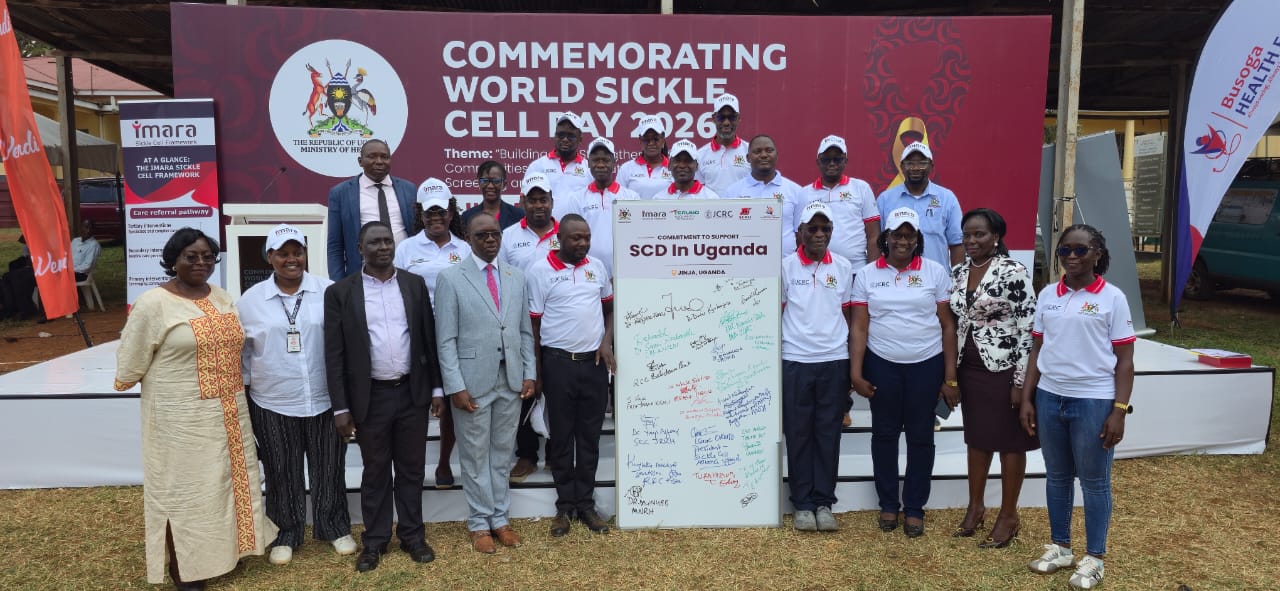
The government of Uganda, in partnership with the Joint Clinical Research Centre (JCRC) and other health stakeholders, has launched the Imara Sickle Cell Framework, a major initiative aimed at improving the diagnosis, treatment, and long-term care of people living with sickle cell disease.
The framework was launched during the commemoration of World Sickle Cell Day in Jinja City, amid growing concern over the high burden of the disease in Uganda.
Health officials estimate that more than 20,000 children are born with sickle cell disease in Uganda every year, with many dying before the age of five due to delayed diagnosis and limited access to consistent care.
The Ministry of Health says the situation highlights the urgent need for coordinated interventions to improve survival rates and enhance the quality of life of people affected by the disease.
Speaking at the launch, Dr. Daniel Kyabayinze, Director of Public Health at the Ministry of Health, reaffirmed government’s commitment to tackling the sickle cell burden through improved access to screening, treatment, and care services.
“This initiative supports our commitment to improving survival and quality of life for children living with sickle cell disease and strengthening access to care across the country,” Kyabayinze said.
He emphasized the need to prevent new cases through premarital screening and testing, noting that identifying genetic risks before marriage can help reduce the number of children born with sickle cell disease.
Despite progress in awareness, screening, and treatment, many families still face challenges accessing specialized care and follow-up services. The Imara Framework seeks to address these gaps by creating an integrated care system that supports patients from diagnosis through lifelong management.
Eyong Ebai, General Manager for Africa at Terumo Blood and Cell Technologies, one of the organizations supporting the Imara campaign, said the initiative focuses on connecting existing services to improve patient outcomes.
“Important progress has been made in expanding awareness, screening, and treatment. The next step is ensuring these services are connected so patients can move seamlessly from diagnosis to treatment and long-term care,” Ebai said.
The framework brings together government agencies, clinicians, patient organizations, blood service providers, and development partners to strengthen coordination throughout the sickle cell care journey.
As part of the rollout, community outreach programmes, healthcare worker training, and screening activities have already started in eastern Uganda, including medical camps in Kayunga, Iganga, and Jinja.
Dr. Cissy Kityo Mutuluuza, Executive Director of JCRC, said the main challenge is not the lack of solutions but ensuring that patients can access available services throughout their lives.
“The challenge is ensuring that every child can access these solutions throughout their life. The Imara Framework is designed to connect diagnosis, treatment, and long-term care so that more people can live longer, healthier lives,” she said.
She revealed plans to strengthen Uganda’s capacity for advanced sickle cell treatment, including the procurement of a bone marrow transplant machine. The initiative is being supported by partners such as Pearl Bank, which has contributed more than Shs 200 million.
Plans are also underway to construct a specialized treatment facility estimated to cost about USD 4 million, aimed at reducing the need for Ugandans to seek treatment abroad.
Local innovation is also contributing to efforts against the disease. Microheam Scientifics has started manufacturing sickle cell testing kits in Uganda, a development expected to improve access to affordable diagnosis.
Sonia Mwesigye, Product Technical Support Manager at Microheam Scientifics, said local production will reduce reliance on imported testing kits and improve availability of screening services.
“Uganda has been relying on imported sickle cell testing kits, but locally manufactured kits will improve accessibility for the population,” she said.
The initiative will also prioritize prevention through premarital counselling and testing, with health officials encouraging couples to know their genetic status before marriage.
Annet Nabaggala, National Coordinator for Test and Treat Initiatives at the Ministry of Health, said early testing can help couples make informed decisions and reduce the risk of having children affected by sickle cell disease.
“When two sickle cell carriers marry, their chances of having a child with sickle cell disease are very high. Couples need to test before marriage,” Nabaggala said.
The Imara Framework aligns with broader continental efforts by African governments, the Africa Centres for Disease Control and Prevention (Africa CDC), and the World Health Organization to improve early diagnosis and expand access to treatment.
Sickle cell disease is the world’s most common inherited blood disorder, affecting the shape and function of red blood cells and causing complications such as anemia, infections, stroke, and organ damage. Africa carries the largest share of the global disease burden.
Health experts believe that improved screening, early diagnosis, and coordinated care systems such as the Imara Framework could significantly reduce deaths and improve the quality of life for people living with sickle cell disease in Uganda.
